

CATHOLIC EDUCATION

Catholic Parents Online is dedicated to supporting Catholic parents as the primary educators of their families, particularly during the critical school years. This website offers a nurturing community, resources, and faith-based guidance to help parents instill authentic Catholic values in their children. Especially when it is discovered that some Catholic schools are not teaching genuine Catholic values or are deviating from traditional teachings, Catholic Parents Online becomes an invaluable ally. It empowers parents to address these challenges by providing tools to reinforce the faith at home, advocate for authentic Catholic education, and ensure their children grow in a strong, uncompromised understanding of their religious faith. Through shared wisdom and spiritual support, the mission helps parents safeguard their children’s faith formation amidst educational environments that fall short of Catholic ideals.
Catholic Schools
Some Catholic schools are not teaching genuine Catholic values or are deviating from traditional teachings. This trend can be seen in the way certain schools prioritize secular curricula, cultural trends such as DEI, or social agendas like Critical Race Theory, over the formation of the whole child in faith and virtue. When the foundational truths of Catholicism are diluted or sidelined, students will leave school with academic knowledge but without a solid understanding of Catholic moral principles, the sacraments, or the call to holiness. Families seeking a truly Catholic education often feel compelled to look for alternatives —such as faithful diocesan schools that may be father from where they live, private traditional Catholic schools that my cost more than their local Cathoic school, or the choose to homeschool —where instruction is explicitly rooted in Church teaching and daily life is permeated with prayer, liturgy, and moral guidance. In this context, preserving the integrity of Catholic education becomes not just a matter of academic quality but a spiritual necessity, ensuring that children grow in knowing, loving, and serving God for the salvation of their souls.
Catholic Home Schooling
Choosing to Catholic homeschool in the spirit of the Church Fathers reflects a deep commitment to the parent’s sacred duty as the primary educator of the child. The early Church Fathers, such as St. John Chrysostom and St. Augustine, emphasized that education should form both the mind and the soul, guiding children toward virtue, faith, and eternal truth rather than worldly success. In the past, the Church consistently taught that education must be rooted in Catholic doctrine, centered on moral formation, and protected from secular influences that could endanger faith. Homeschooling, therefore, allows parents to fulfill this God-given responsibility by creating a Christ-centered environment where every subject is taught in light of divine truth, where daily prayer and the sacraments form the rhythm of learning, and where the ultimate goal of education is holiness and union with God.
CATHOLIC PHILOSOPHY
Choosing a Catholic High School:
Questions Parents Should Ask of Schools
Leadership
-
Does the school’s mission statement clearly refer to the formation of students in the Catholic faith, making students saints or the salvation of souls?
-
Who are your board members? Are they practicing Catholics?
-
Is the school president a practicing Catholic?
-
Do school leaders make the Catholic Profession of Faith and Oath of Fidelity?
-
Is the school on the Cardinal Newman Society’s High School Honor Roll?
Sacraments and Religious Life
-
Is the Holy Mass clearly at the center of student life? Is an all school Holy Mass offered at least once a week?
-
Is the Sacrament of Reconciliation offered at the school at least once a month?
-
Does the school have a formal chapel or does it merely have a multi-purpose room which also serves as a place for concerts and lectures? Is the Blessed Sacrament reserved in the chapel?
-
What opportunities are there for Adoration of the Blessed Sacrament?
-
What other devotions are regularly scheduled for students, such as the Rosary and prayer groups?
-
Are there programs to foster vocations to the priesthood and religious life? How many graduates are ordained to the priesthood or have entered religious life?
Faculty
-
What percent of your faculty are practicing Catholics?
-
Are faculty members required to make the Catholic Profession of Faith and Oath of Fidelity?
-
Are there any dissenters from the Faith among the faculty?
-
What ongoing faith formation do you provide for your faculty members?
-
Is there a school Chaplain on location at least one day per week? Does the Chaplain offer classroom instruction?
Curriculum
-
Is every student required to take one or more courses in which they are taught authentic Catholic doctrine and practice? What are they?
-
Has your school curriculum been formally reviewed and approved by the Archdiocese?
-
Do you require that theology courses be faithful to Scripture, Tradition, and the Church’s Magisterium, and also to the principles and methods proper to Catholic theology?
-
Does your curriculum include the study of classical Catholic philosophers such as Origen, St. Augustine and Thomas Aquinas? If so, how?
-
What kind of student retreat programs do you offer? Who leads these retreats? What are the goals of each retreat?
-
How is the Catholic Faith integrated into subjects such as Math, History, Art, Humanities and Science?
-
How is the Catholic Faith integrated in service programs and social outreach? Is the school doing more than developing “social do-gooders” or is it producing saints who see that their social actions should be an extension of an interior spiritual life? Does the school see that reaching out to the unborn and needy pregnant women have a part in the social service program?
Classroom
-
Do classes begin and end with prayer?
-
Are there visible signs of the faith in the classroom (e.g., crucifix, icons, etc.)?
-
Are there any signs that appear to conflict with the Catholic Faith (e.g., HRC, Equal Sign, Rainbows, Safe Spaces, etc.?
Student Clubs
-
Does the school have a student pro-life club?
-
Does the school have any clubs that foster dissent from the Catholic Faith (e.g., LGBT club)?
-
Does the school require all student clubs and activities to operate in accord with Catholic teaching?
Questions To Ask Faculty Members in Any Department:
-
What is the role of the Pope and the Bishops in terms of teaching the truths of the Faith?
-
Do Catholics have a serious responsibility to attend Mass on Sundays and Holy Days of Obligation? Is it a mortal sin for a person to intentionally miss Mass on those days without a valid reason?
-
What do you believe about people having pre-marital sex?
-
What do you think about divorce and remarriage without an annulment?
-
What do you think about abortion? How should the law protect the pre-born?
-
What do you think about the ordination of women?
-
What are your views on homosexuality?
-
What do you believe about euthanasia and assisted suicide?
-
What do you think about the use of contraceptives?
-
What are your views on transgenderism?
-
What are your views on Critical Race Theory (and diversity/equity/inclusion)?

IS CRT IN MINNESOTA CATHOLIC SCHOOLS?

If you send your kids to a Catholic school, you might think that they are protected from Critical Race Theory and other forms of indoctrination taking place in many public schools today. Sadly, Catholic schools are not immune from going ‘woke‘, as one concerned Catholic mother related in a recent story about her child’s school.
A cursory review of websites for some of Minnesota’s Catholic schools has revealed that a number of schools have adopted “Diversity, Equity and Inclusion” programs that likely have elements of CRT included in their curricula. Website excerpts are provided on our CRT & DEI pages for the following schools: Academy of Holy Angels, Benilde-St. Margaret, Cretin Derham Hall, Cristo Rey, Totino-Grace and Visitation School.
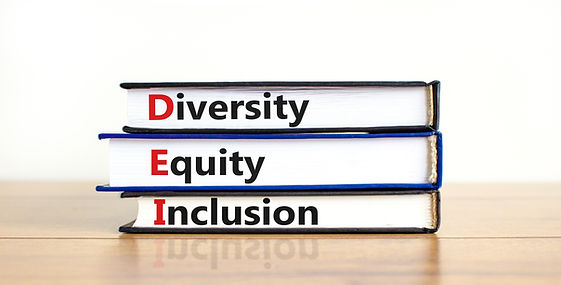
Catholic education seeks to overcome division, not to create it. Critical Race Theory (CRT) conflicts with Catholic philosophy because it seeks to divide people. It is inherently racist and has no business being included in a Catholic school’s curriculum.
Social Emotional Learning (SEL) is the delivery system for CRT, Diversity, Equity and Inclusion (DEI) and Gender Ideology. To understand SEL, one must first decode the language that is used because the proponents of SEL often use words that we think have one meaning, but the proponents have a different meaning in mind. In other words, they use our words but not our dictionary. Once you dig down and inspect the roots of SEL, you can understand why this language manipulation is by design.
The organization Moms for Liberty Gives an easily understandable definition of SEL. They say, "SEL is the Collaborative for Academic Social and Emotional Learning (CASEL). SEL required a systemic transformation that has significantly altered the teaching practices, discipline policies, counseling services, and school culture. The ultimate goal of SEL is to shift the values, beliefs, attitudes, and worldviews of students. The goal is to psychologically manipulate students to accept the progressive ideology that supports gender fluidity, sexual preference exploration, and systemic oppression."
Looking at the root organizations and philosophies behind the drivers of SEL, Catholic parents see red flags all over the place. Their concerns are justified.
PARENTS MUST ENGAGE

Parents cannot assume their children are not being exposed to inappropriate ideologies or decisive curriculum just because they attend a Catholic school. Catholic parents must become much more involved by reviewing their school’s educational programs and curricula. Don’t be afraid to confront your school’s administrators if you suspect CRT, DEI, Gender Ideology, or Social Emotional Learning has infiltrated your school. Contact your school’s headmaster to schedule a discussion. You should also reach-out to Dr. Jason Slattery, Director of Catholic Education for the Archdiocese of St. Paul and Minneapolis. He can be reached at 651.291.4494 or at slatteryj@archspm.org.
Dear Parents,
Do you have children enrolled in Catholic or private schools? Do you home school? If so, the following information is a must read!
A friend of CPO has spent many years following our education system, specifically with regard to our meddlesome Federal Education system. She and her husband have uncovered objectionable issues while working to protect parents rights.
CLICK HERE to find out more, you may be shocked to discover what Scholastic books are teaching our children!
CPO - Scholastic Books
CPO - Social Emotional Learning